Extrajudicial Settlement with Deed of Sale in the Philippines: A Practical Guide for Heirs Selling Inherited Property
Extrajudicial Settlement with Deed of Sale in the Philippines: A Practical Guide for Heirs Selling Inherited Property
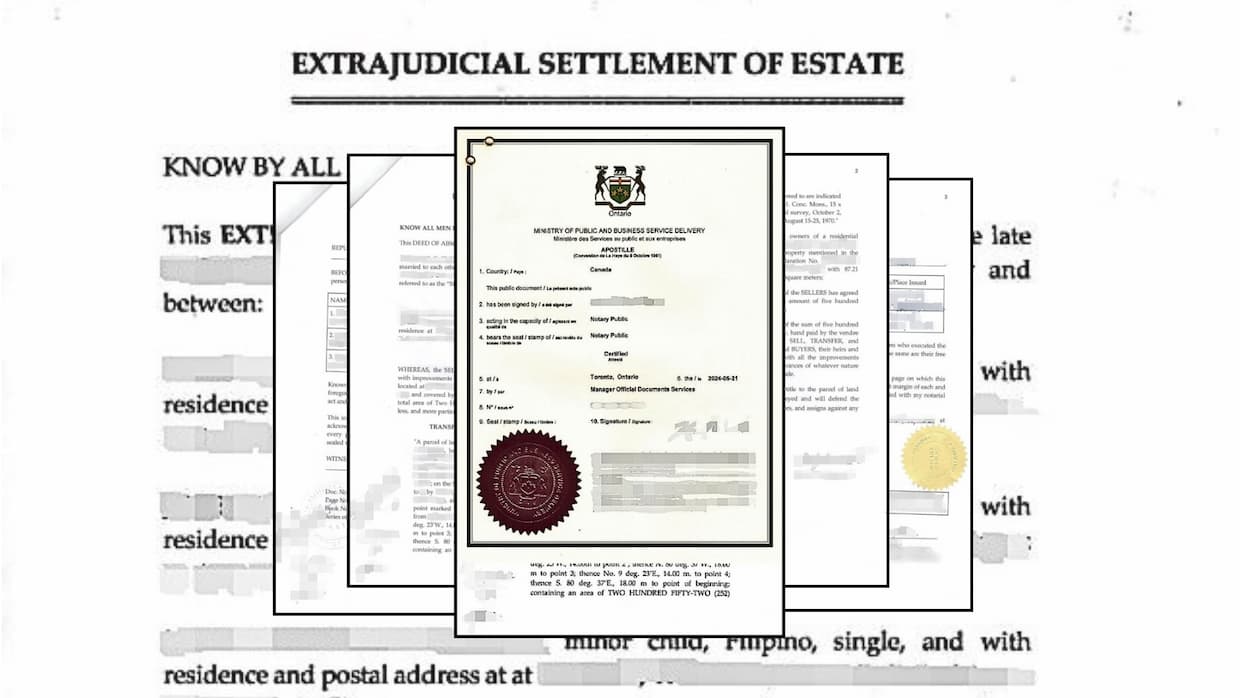

An Extrajudicial Settlement with Deed of Sale in the Philippines is a document used when heirs are selling inherited property to a new owner.
This document is used to:
- Settle an estate
- Sell the inherited property
Some people just try to sell the inherited property without settling the estate.
But an estate must be settled so that a buyer can transfer the land title to their name.
So, people combine settling the estate with selling to the buyer in one effort and document which can end up saving them effort and a little money.
Below, I’ll answer common questions on an Extrajudicial partition with sale and outline the requirements, cost and process to do it.
An Extrajudicial Settlement with Deed of Sale in the Philippines is a document used when heirs are selling inherited property to a new owner.
This document is used to settle an estate and sell the inherited property. Some people just try to sell the inherited property without settling the estate. But an estate must be settled so that a buyer can transfer the land title to their name.
So, many families combine settling the estate with selling to the buyer in one effort and one document. If done properly, it can save effort (and sometimes repeated trips) while protecting the buyer because the buyer can see the estate partition is actually going forward.
TLDR (Article Summary):
An extrajudicial settlement with deed of sale is commonly used when heirs want to sell inherited land and complete estate settlement and sale in one coordinated process. The most common reasons transactions fail are incomplete documents, skipped Rule 74 publication, unpaid taxes, and heir disagreements. If you complete the checklist—documents, publication, BIR assessment and payment, eCAR, local transfer tax, and Registry of Deeds registration—the buyer can usually transfer the title to their name.
Action: If you are about to sell inherited property, email admin@lawyerphilippines.org with (1) a scan of the original title and the tax declaration, (2) the date of death, and (3) a list of heirs so we can tell you the safest and fastest path for your specific facts.

Send us an email with the details for
personalized recommendations or schedule a consulation if needed.
Extrajudicial Settlement of Estate is a document that settles an estate so that the property can be transferred to the heirs.
An Extrajudicial Settlement of Estate is a document that settles an estate so that the property can be transferred to the heirs, without going to court, when the legal requirements are met.
- An extrajudicial settlement means a document where the details of how a deceased’s properties are divided between heirs are laid out and where supporting information regarding family relationships and property ownership are presented.
- It is sometimes called an extrajudicial partition of estate and is often shortened to EJS.
- It is signed, dated, and notarized as a public instrument, then used for BIR processing and registration.
- It is generally easier to do when you already have the required property and civil registry documents; when you don’t have them, it can be very challenging.
- As a general rule, extrajudicial settlement is used when the decedent left no valid will and the heirs proceed by agreement under Rule 74, Section 1 of the Rules of Court.
TLDR: An extrajudicial settlement is an out-of-court estate settlement document that identifies the heirs and explains how inherited property will be divided or transferred.
Action: Write down every legal heir (including children from prior relationships and heirs abroad) and confirm whether there is a valid will before drafting the deed.
A deed of sale is a document that transfers property from the original owner to a buyer.
A Deed of Sale is a document that transfers property from the owner to a buyer, with details of the parties, property, and price, and it is used for tax payment and title transfer.
- A Deed of Sale identifies the seller and the buyer and contains the property description (title number, technical description, location).
- It is signed, dated, notarized, and submitted to the BIR for tax clearance in registrable transfers.
- For land, the deed of sale, original land title plus BIR clearance (commonly eCAR) and local taxes are typically needed before the Registry of Deeds issues a title in the buyer’s name.
- For inherited property, the deed of sale alone to transfer to the buyer’s name is not enough because the registered owner is already deceased and the estate must be settled first.
TLDR: A deed of sale is the sale document that supports tax clearance and registration, but for inherited property it usually cannot be completed unless the estate is settled.
Action: Ask your buyer for their full legal name, current address, civil status, and TIN before you finalize the draft to avoid redoing notarization—and if you want a lawyer to review the sale terms quickly, email admin@lawyerphilippines.org.
A combined Extrajudicial Settlement and Deed of Sale is the best option if an estate already has a serious buyer
An Extrajudicial Settlement with Deed of Sale is a combined document where heirs settle the estate and transfer the inherited property to a buyer in one coordinated instrument.
- It itemizes the estate property, identifies the heirs, and shows how the property is being transferred—ending with the sale to the buyer.
- It is usually the best option when an estate already has a serious buyer and the heirs want one coordinated process.
- When combined, there is often only one coordinated effort for document signing and one planned BIR filing sequence, instead of doing an EJS first and a deed of sale later.
- It protects the buyer because the buyer sees that the heirs are not just “selling” but are also settling the estate so transfer becomes possible.
- It may reduce duplicated steps, but it does not remove BIR and LGU tax requirements.
TLDR: An EJS with deed of sale is a combined estate settlement and sale document used when heirs are selling inherited property and want a single, coordinated path to title transfer.
Action: If you have a ready buyer, confirm the document plan in writing (combined extrajudicial settlement with deed of sale vs. separate deeds) before you start work on the document and BIR process.
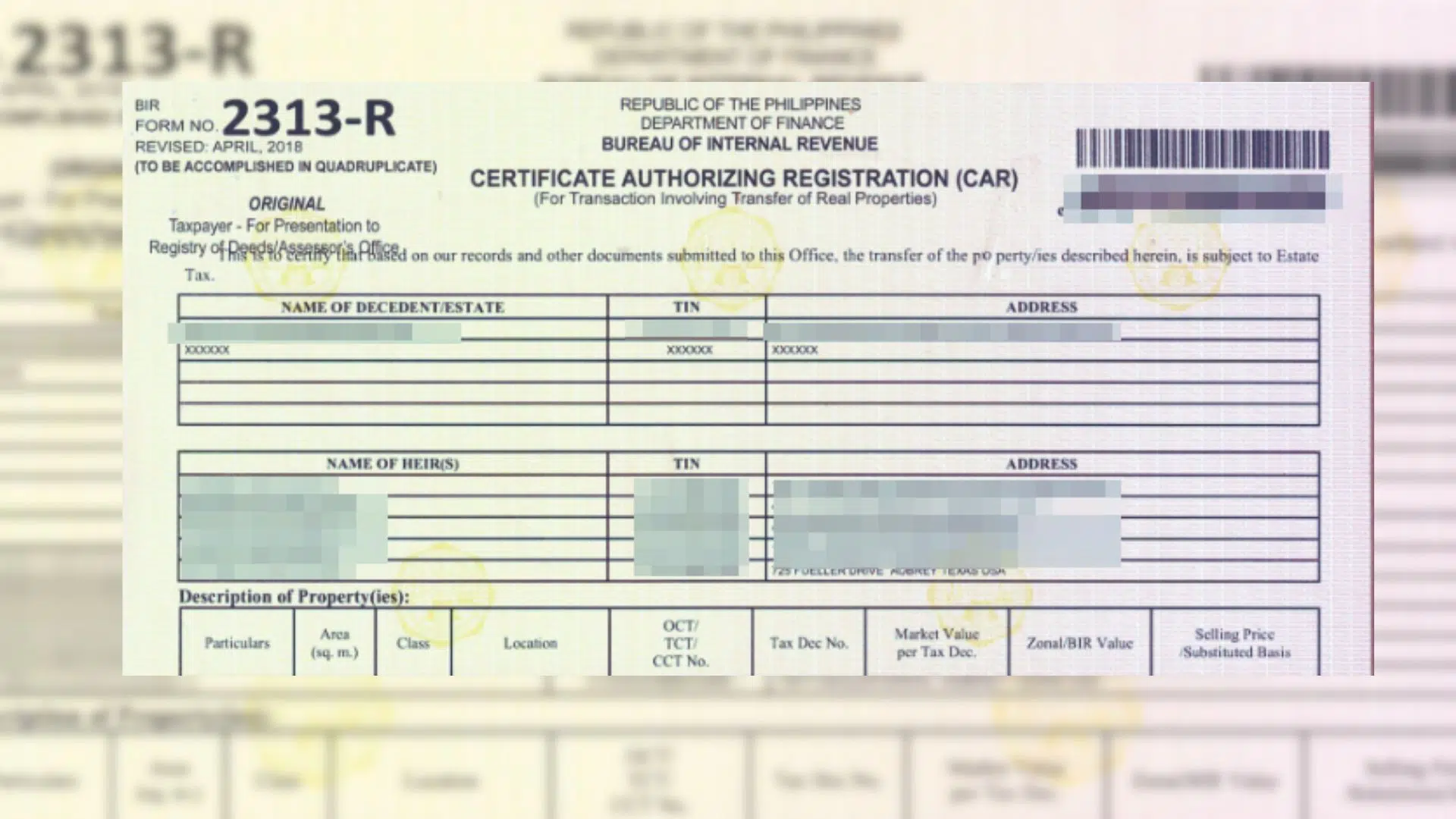
Registry of Deeds requires the original and certified true copy of the land title plus the BIR’s CAR to register and issue a new title.
An EJS-with-sale is governed by court rules (estate settlement), tax rules (BIR), and registration rules (Registry of Deeds/LRA), and missing one process at these agencies can block transfer to the new owners.
- Rule 74, Section 1 (Rules of Court): Allows extrajudicial settlement by agreement between heirs when the decedent left no will and the legal conditions are met. It also requires registration/annotation and states that the settlement does not prejudice persons who did not participate or have notice.
- Publication: Rule 74, Section 1 requires that the notice of the extrajudicial settlement be published once a week for three (3) consecutive weeks in a newspaper of general circulation.
- One-year framework for estate BUT 30 days for sale: The TRAIN law extended estate settlement to 1 year, but taxes for deeds of sale must be paid in 1 month or risk late fees, so a combined deed requires quick coordination so that the taxes are promptly paid and late fees avoided.
- Estate tax filing and payment: Estate tax is governed by the National Internal Revenue Code (as amended), and BIR implementing rules (including BIR Revenue Regulations No. 12-2018) reflect a 6% estate tax on the net estate and provide that the estate tax return is generally filed within one (1) year from the decedent’s death (subject to allowed extensions).
- Sale tax filing and payment: 6% sales tax on the sale.
- BIR eCAR: In registrable transfers, the Original Land Title and the Certified True Copy of Title as well as the BIR’s Certificate Authorizing Registration (now commonly issued as an eCAR) is required for the Registry of Deeds to register the transfer and issue a new title.
- Local transfer tax: The Local Government Code (Republic Act No. 7160), Section 135 authorizes provinces and cities/Metro Manila to impose transfer tax within statutory limits, and proof of payment is typically required before registration.
- If an owner’s duplicate title is lost: Presidential Decree No. 1529 (Property Registration Decree), Section 109 sets out the court process for replacement of a lost duplicate certificate.
- If the Registry’s title is lost: Presidential Decree No. 1529 (Property Registration Decree), Section 110 details the court process to replace a lost Registry of Deed’s Title.
TLDR: Rule 74 (including publication), BIR estate tax and eCAR requirements, local transfer tax rules, and land registration rules all apply—so compliance is not optional if you want a registrable transfer.

Titles and ownership must first be legally transferred from the decedent to the heirs
You settle the estate so the buyer can legally register the transfer and obtain a new title; selling without settlement often creates a “paper sale” that cannot be registered, and most serious buyers will demand that the estate is settled before buying.
- The Registry of Deeds still recognizes the deceased as the registered owner until proper settlement/transfer documents are registered.
- Without BIR clearance (commonly eCAR) and compliance with requirements, the Register of Deeds generally will not register the transfer.
- If not all heirs consented or were properly included, disputes can emerge and the buyer’s title can be attacked.
- Delays tend to create practical problems: documents go missing, heirs become unreachable, and costs increase due to unpaid taxes and penalties since estate taxes increase every year until the estate is settled.
TLDR: Estate settlement is what makes the sale transferable and registerable; without it, the buyer usually cannot obtain a title in their name and risks future disputes.
Action: Put in your agreement a clear “completion condition”—no full payment release until the family can produce the BIR eCAR and the Registry of Deeds filing receipt.
 Documentary requirements must be complete before the BIR accepts it for assessment
Documentary requirements must be complete before the BIR accepts the filing for assessment, and missing paperwork is one of the top reasons transactions get delayed or abandoned.
- Property documents:
- Owner’s duplicate Original/Transfer Certificate of Title (for titled land)
- Certified true copy of title from the Registry of Deeds
- Latest tax declaration and proof of updated real property taxes as well as tax declaration for the date of death of the deceased.
- Civil registry documents:
- Death certificate of the decedent (and marriage certificate if relevant)
- Birth certificates of heirs (and marriage certificates and death certificates if relevant)
- Tax identification:
- Estate TIN (when required) and TINs of heirs
- Because this is with sale, add:
- Buyer’s TIN and valid government IDs
- Buyer’s civil status documents (as needed for drafting)
- Clear sale terms (price, payment schedule, who shoulders taxes/fees)
- Process compliance documents:
- Notarized EJS-with-sale instrument
- Proof/affidavit of publication (once a week for 3 consecutive weeks)
TLDR: You generally need the title and tax documents, death and heirship documents, TINs, buyer details, and proof of publication to complete the BIR and registration process.
Action: Make several photocopies and scanned PDF copies of every document before you go to the BIR so you can comply quickly if the assessor asks for extra copies.

An ONETT officer can easily deny your application if you miss one of the documentary requirements
If you are missing documents, you may need more time and money to retrieve them, and in some situations a missing document changes the legal procedure (including possible court action).
- Lost owner’s duplicate title: The buyer’s transfer can be blocked until a court process for replacement is completed under the registration rules.
- No land title exists: You may be dealing with untitled land, which may require a separate titling/registration path before a buyer can obtain secure ownership.
- Errors on title: Depending on the error, correction may require proceedings under the land registration framework or coordination with the Registry of Deeds.
- Missing death certificate: If you have correct details (name, place, date), PSA retrieval is often possible; if details are uncertain, retrieval can become difficult and may require legwork at civil registries and archives.
- Heirs not on good terms: Even complete documents won’t help if heirs refuse to sign; the remedy can shift to negotiation or court.

Make sure that the ONETT officer has given you a compliance form so you know who to look for on your next round of visit
TLDR: Missing documents can turn a simple out-of-court process into a longer, more expensive path, so document retrieval should happen before you commit to a buyer’s deadline.
Action: Do a “document audit” in writing—list what you have, what is missing, and who is responsible for retrieving each missing item within a specific date.
Some government offices don’t accept walk in so try coordinating with them by phone or email first
Yes, all heirs generally have to agree when the family is doing an EJS-with-sale, because an extrajudicial settlement is an agreement among heirs; if heirs cannot agree, the solution may shift to partition among heirs or court proceedings, which should be deemed a last resort as court is both expensive and time-consuming.
- If one heir refuses to sign, a combined EJS-with-sale is usually not workable.
- If heirs can agree to partition but not to sell, they can settle the estate and divide the property, then later each heir can decide what to do with their share.
- If heirs cannot even agree on the partition, a court case (judicial settlement/partition) may be needed, which is slower and more expensive.
- Practically, the cheapest path is usually negotiation and compromise before going to court.
TLDR: For an EJS with deed of sale, unanimous heir cooperation is crucial; without it, expect partition solutions or court proceedings.
Action: Hold a short family meeting (even via Zoom) and agree in writing on sale price, expense sharing, and who will sign/coordinate before you pay for drafting and publication.

The tax due for the sale and EJS will be combined too
The cost can be expensive because you are paying both estate-related costs and sale-related costs, and delays can add penalties if filings are late.
- Professional and incidental costs: lawyer’s fees, CPA/accountant fees, notarial fees, document and courier costs, publication fees.
- Estate tax: Implementing rules reflect a 6% estate tax on the net estate value.
- Example (simplified): if the net estate is PHP10,000,000, the estate tax at 6% is PHP600,000.
- Sale-related taxes (depending on facts): For sale of real property classified as a capital asset, a 6% capital gains tax is generally imposed based on the gross selling price or fair market value, whichever is higher. If the property is an ordinary asset (for example, held primarily for sale in the ordinary course of business), different income tax and withholding rules may apply.
- Local transfer tax: Paid to the LGU and required before registration; the Local Government Code sets caps and a 60-day payment period from execution or date of death.
- Other costs: Registry of Deeds fees, unpaid real property taxes, and possible BIR penalties for late filing/payment.
TLDR: Budget for lawyer/CPA fees, publication, estate tax, sale taxes, local transfer tax, and Registry of Deeds fees; the longer you delay, the more problems and penalties can pile up.
Action: Before agreeing on a “net to heirs” amount, compute a conservative budget that includes estate tax, sales taxes, LGU transfer tax, publication, and registration fees.

It is important to settle family matters first before processing an estate settlement
Yes, all the heirs have to agree to sell property for a Deed of Extrajudicial Settlement of Estate with Absolute Sale.
If the heirs cannot agree on the sale, then they can split up the property but they still have to settle the estate.
If the heirs cannot agree on how to even split up the estate, then they will have to go to court.
Going to court to settle an estate is called a Judicial Partition of Estate in the Philippines (vs. An Extra Judicial Partition of Property where extra in front of judicial make the phrase mean “out of court”)
A court order for transfer of property detailing how it should be divided will be released after a successful court case, but it is really best to avoid court.
Court is expensive and takes a lot of effort.
You can hire a lawyer to go to court but you might realize it is best to just talk amongst yourselves.
Your best course of action is to negotiate with those that don’t agree and come to a compromise.
You can hire a lawyer to negotiate, but it will also cost money. You are better off trying to settle it on your own and bracing yourself for difficult conversations.
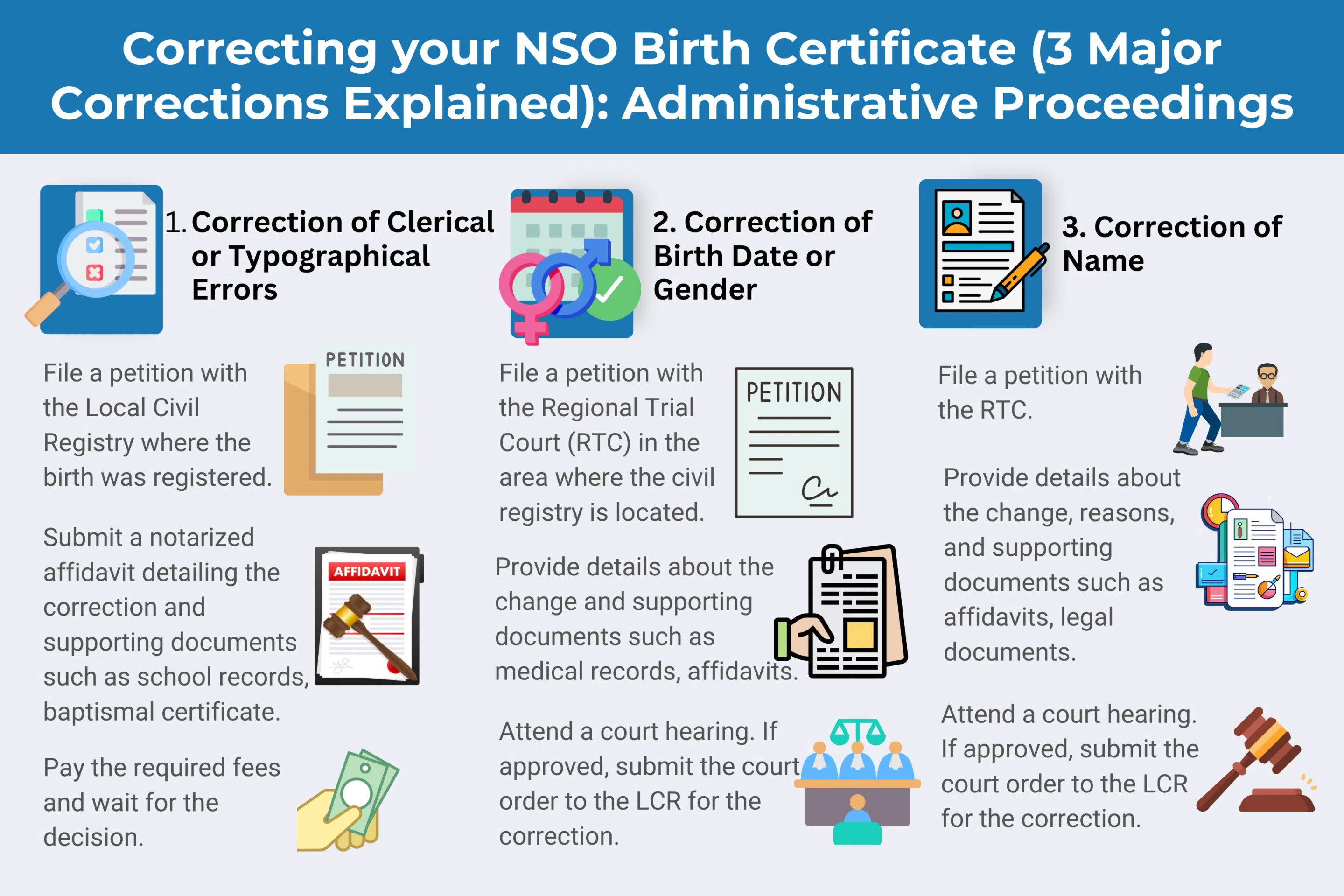
Correcting your NSO birth certificate details can be done administratively without needing to go to court
Often, extrajudicial settlements with deeds of sale are started but not completed, and the reasons are predictable and avoidable.
- Incomplete documentation: missing titles, tax declarations, or civil registry papers cause BIR and Registry of Deeds delays.
- Overlooking tax responsibilities: neglecting estate tax and sale-related taxes can lead to penalties and cash shortfalls.
- Neglecting legal guidance: heirs sometimes proceed without counsel and discover too late that one missing step makes the deed unusable.
- Skipping publication or excluding heirs: failure to comply with Rule 74 requirements increases the risk of challenges and can undermine reliance on the two-year framework.
- Stopping after signing: a notarized deed is not the finish line; the finish line is BIR eCAR + Registry of Deeds registration + updated tax declaration.
TLDR: The most common failure points are missing documents, unpaid taxes, skipped publication/excluded heirs, and abandoning the process after notarization.
Action: After notarization, set a “no excuses” date for BIR filing and publication, and track receipts in one shared folder so the process doesn’t stall.

Supreme Court decisions emphasize that heirs and buyers must be extremely cautious in extrajudicial settlements.
Supreme Court decisions consistently show that ignoring required steps or excluding heirs creates long-term title risks, so both heirs and buyers should treat compliance and documentation as non-negotiable.
- Heirs of Spouses Ramirez v. Abon (G.R. No. 222916): The case illustrates how title document problems and replacement/reconstitution disputes can escalate into litigation and derail transfers.
- Practical takeaway: Buyers should require proof that the settlement and taxes were properly completed before paying in full, and heirs should not rush signatures while ignoring procedural requirements.
TLDR: Supreme Court cases warn that shortcuts—missing heirs, missing notice, and title defects—can defeat a “quick” inheritance sale and expose both heirs and buyers to lawsuits.
Action: If you are a buyer, require a due diligence bundle: (1) proof of publication, (2) BIR eCAR, (3) signed deed by all heirs, and (4) updated tax clearances before full payment.
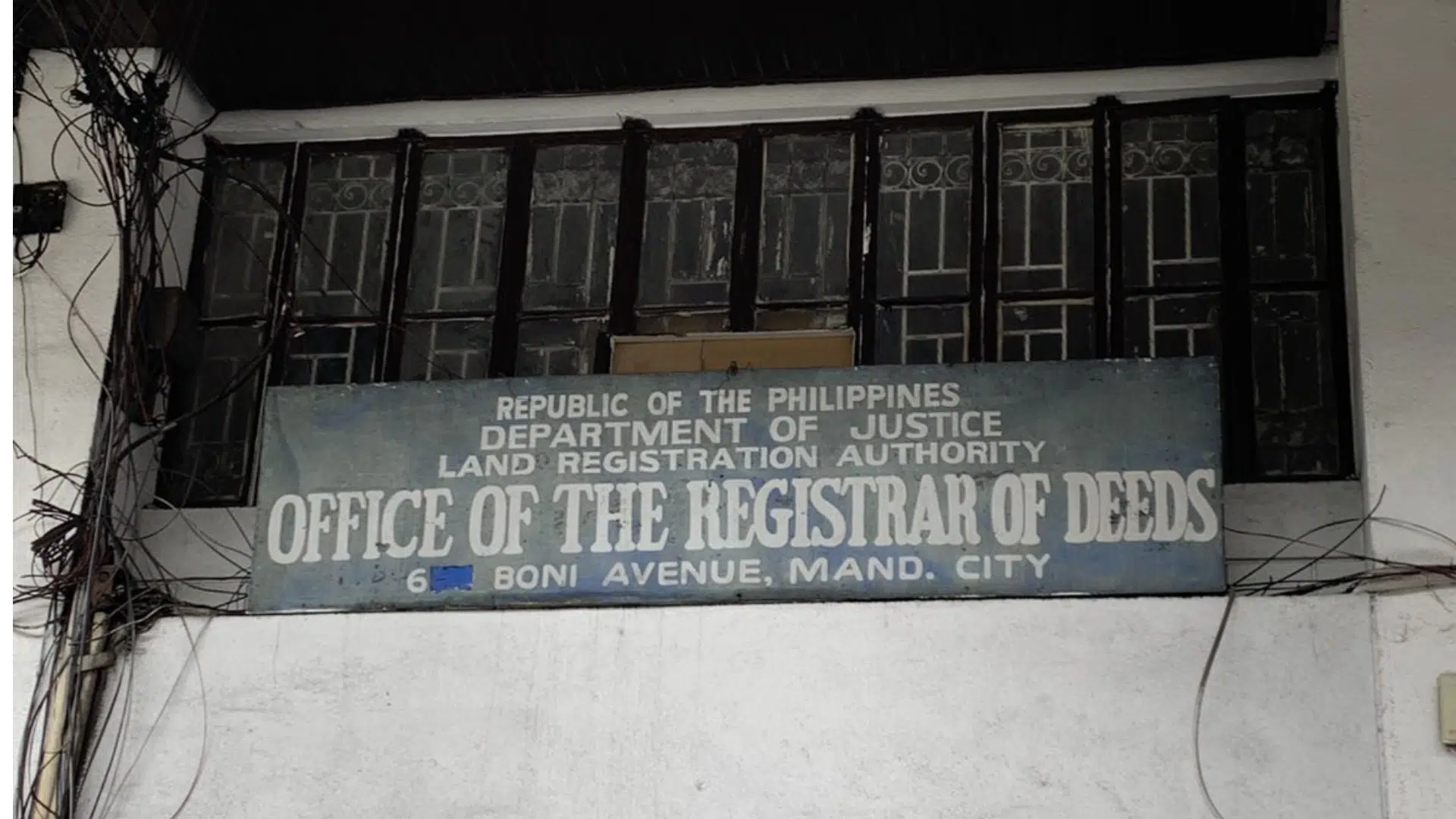
The Registry of Deeds verifies for the completeness and accuracy of the documents.
It makes the most sense when there is a ready buyer, all heirs agree, the decedent left no valid will, and the family is committed to finishing BIR and Registry of Deeds registration—not just signing the document.
- Best used when you can complete the documentary requirements and publication, and you can fund the taxes and fees.
- Not ideal when heirs are fighting, heirs are missing/unknown, heirs include minors requiring additional court steps, or key documents (like the owner’s duplicate title) are missing and unresolved.
- It works best when the buyer understands the timeline and releases payment according to completion milestones.
TLDR: EJS with deed of sale is best when heirs agree, documents are complete, and you plan to complete BIR and registration steps promptly; it is a poor fit when disputes or missing documents make completion impossible.
Action: If your family and buyer can agree, structure the payments in milestones to protect everyone—and if you want a tailored checklist, email admin@lawyerphilippines.org.
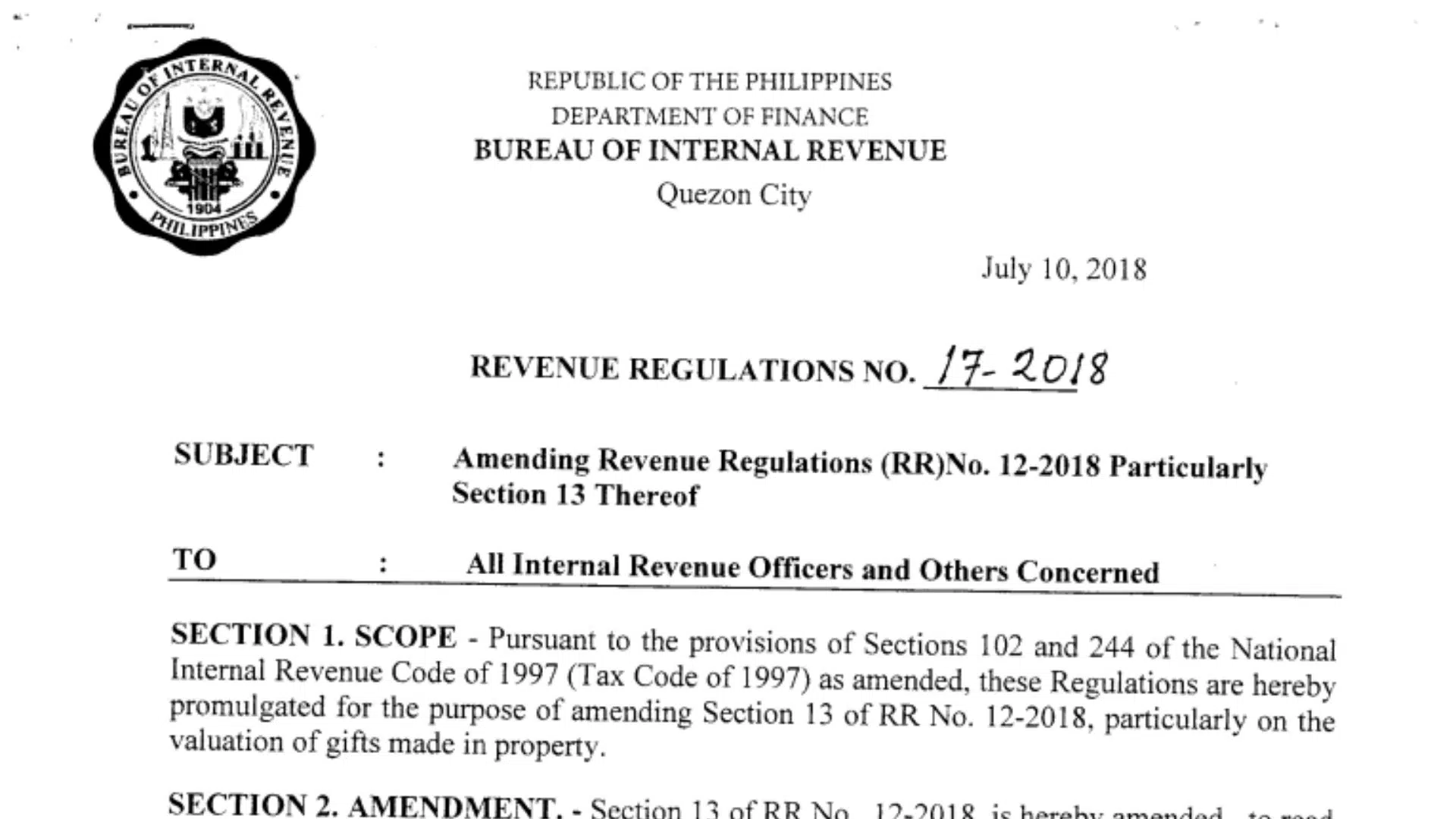
The National Internal Revenue Code (NIRC) directly governs the taxes involved in an extrajudicial settlement of estate in the Philippines.
The safest way to avoid rejection and future disputes is to anchor your document and checklist on the actual legal authorities used by the BIR, the Registry of Deeds, and the courts.
- Rules of Court, Rule 74 (Extrajudicial Settlement of Estate; publication and two-year framework)
- BIR Revenue Regulations No. 12-2018 (implementing estate tax rules after TRAIN)
- National Internal Revenue Code (as amended) provisions on estate tax, penalties, and taxes on sale/transfer of real property (depending on classification)
- Local Government Code of 1991 (Republic Act No. 7160), Section 135 (Tax on Transfer of Real Property Ownership)
- Presidential Decree No. 1529, Section 109 and Section 110 (replacement of lost land title)
- Relevant Supreme Court rulings on Rule 74 compliance, excluded heirs, and title transfer disputes
TLDR: These authorities are the backbone of the process; if your deed and checklist do not match them, you risk BIR or Registry of Deeds rejection—or future lawsuits.
Action: Evaluate your situation with a practiced estate lawyer because although these are the laws, actually knowing how to apply them and what to watch out for is very important and consultation can save you money and heartache later on.