Deed of Sole Adjudication in the Philippines: A Practical Inheritance Guide for a Sole Heir
Deed of Sole Adjudication in the Philippines: A Practical Inheritance Guide for a Sole Heir
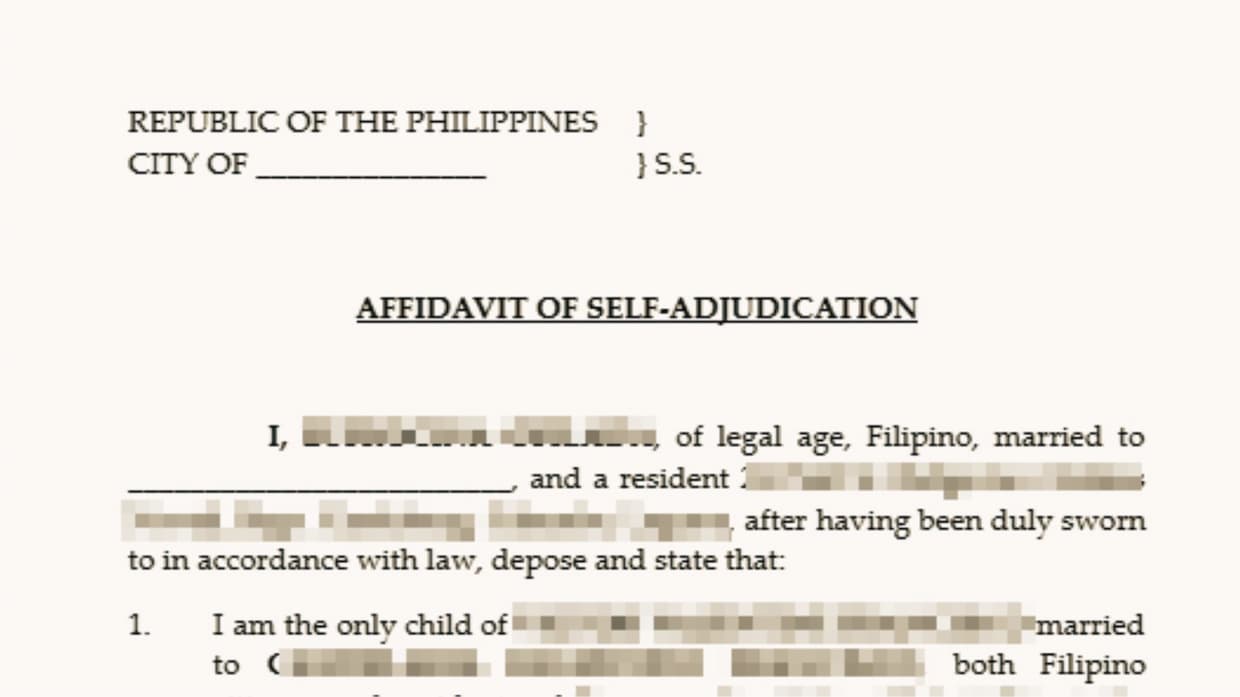

When a loved one dies, many families learn that “inheritance” is not just about who gets what. It is also about proving the family facts, paying the correct taxes, and updating government records so the property can be sold, mortgaged, or transferred later.
If you are truly the only legal heir – for instance if you are an only child and both parents are deceased – Philippine procedure may allow you to settle an intestate estate without a full court case through a Deed of Sole Adjudication (often done as an Affidavit of Self?Adjudication), followed by publication, estate tax compliance at the BIR, and registration at the Registry of Deeds and the Assessor’s Office.
But “only heir” is a legal conclusion, not a feeling. The most expensive mistakes happen when heirs collect the wrong documents or assume there are no other heirs—then discover later that a title transfer is blocked, a buyer backs out, or a relative files a case.
TLDR: A Deed of Sole Adjudication is the sole-heir route for settling an intestate estate without court, but it only works if you are truly the only heir and you complete publication, BIR estate tax filing/payment, and registry transfers.
Action: Email admin@lawyerphilippines.org with (1) the date of death, (2) the property location, and (3) what documents you have, so you can be told the safest document and process for your exact situation.

Send us an email with the details for
personalized recommendations or schedule a consulation if needed.
A Deed of Sole Adjudication (often done as an Affidavit of Self-Adjudication) is the written instrument a sole heir uses to adjudicate an intestate estate to himself/herself and is an administrative process that does not require court, which then allows them to transfer after completing publication and tax/registration requirements.
- Used only when there is truly only one legal heir.
- Commonly used to transfer real property (titles), update tax declarations, and support release/transfer of other estate assets.
- It should list the estate assets and include the facts required for an extrajudicial settlement (no will, sole heirship, and debt status).
- Even if you sign it today, the transfer is not “finished” until you complete BIR estate tax compliance and register with the Registry of Deeds and Assessor’s Office.
TLDR: It’s the sole-heir document used for extrajudicial settlement of an intestate estate, but it must be supported by publication, BIR compliance, and registration to be effective.
Action: Email admin@lawyerphilippines.org and request a quick “sole-heir eligibility check” before you sign anything, especially if there were prior marriages or children.

The right lawyer can help you plan an estate settlement that is most economical
It is generally allowed for an intestate estate (no will) and there is only one legal heir, because the Rules of Court allow estate settlement with the BIR and the Registry of Deeds and does not need court.
- It is done when there is no valid will and only one heir.
- If there are multiple heirs, settlement must generally be by a public instrument signed by all heirs (or you proceed judicially if there are disagreements between the heirs).
- Submission and payment of the estate taxes at the BIR is needed to get an electronic Certificate Authorizing Transfer or eCAR
- Publication is required at the Registry of Deeds stage, and the rules warn the settlement is not binding on persons who did not participate or had no notice.
TLDR: You can use it only for intestate estates where you are the only legal heir to transfer properties to your name in the Philippines.
Action: Create a one-page family tree (spouse/children/parents) and a one-page asset list, then have both reviewed together before drafting the deed.

The tax due will depend on the date of death of the decedent and several other factors
Self-adjudication refers to the administrative process used to transfer an estate to one heir and there is no practical difference between an Affidavit of Sole Adjudication vs. a Deed of Sole Adjudication. At least in the Philippines, they refer to the same process, although the Philippines uses the term Affidavit of Sole Adjudication more commonly. The process is that the estate is settled through the appropriate affidavit/deed and then subsequently submitted at the BIR prior to registration at the RD. It does not need court.
- The name you call it matters less than the content: it must state intestacy, sole heirship, and have an asset description.
- In the Philippines, it is more commonly called Deed of Sole Adjudication.
- It must still be registered at the BIR and estate taxes paid before transferring at the RD and City Hall.
TLDR: Self-adjudication is a procedure for sole heirs to settle an intestate estate without court, but it still requires strict compliance and proof. Self-adjudication is the same process as a Deed of Sole Adjudication – it is just a different name.
Action: Ask your lawyer to include a short “acceptance checklist” for BIR and Registry of Deeds so you can be sure that the Self Adjudication or Deed of Sole Adjudication you sign has the correct documents and is correctly formulated.

Sole heir adjudication vs multi?heir EJS
The difference is the number of heirs: sole adjudication is for one heir, while an Extrajudicial Settlement (EJS) is for multiple heirs who agree to settle the estate without court.
- If there are multiple heirs, all heirs (and proper representatives for minors) should be addressed and the instrument must reflect their agreement.
- Both procedures involve the same BIR estate tax workflow leading to an eCAR before registration at the Registry of Deeds
- If heirs disagree, or a will must be probated, judicial settlement/probate is often necessary.
TLDR: Sole adjudication is only for a single heir; multiple heirs usually require an EJS (or court) to avoid future challenges.
Action: If even one heir is abroad or uncooperative, you might have to hire a lawyer to discuss going to court, as that is usually the only path when heirs disagree.

Sole heirship needs proof. False claims risk liability.
You confirm sole heirship by checking with a lawyer to see inheritance laws —most commonly a surviving spouse, children (legitimate or illegitimate), or, in some situations, surviving parents/ascendants.
- A Sole Heir exists when there is only one child and no living parents.
- If there is one child and a surviving spouse, then the inheritance is split between them.
- Illegitimate children must be included as compulsory heirs.
- Get civil registry records you can: marriage certificates, CENOMAR/CEMAR as applicable, and birth certificates of the decedent and all the heirs.
- If there is any doubt, a wrong “sole heir” claim can be attacked later and can trigger invalidity and even criminal exposure for false statements.
TLDR: A sole adjudication is only as safe as your sole-heir verification; all compulsory heirs inherit together under the law.
Action: Make a written list of all possible heirs (even estranged ones) and gather civil registry documents first—then discuss with a lawyer.
 NIRC governs estate tax, income tax, and compliance rules ensuring proper filing and payment.
The core procedural authority is Rule 74 of the Rules of Court on summary settlement of estates, while title transfers follow land registration rules and tax compliance follows the National Internal Revenue Code (as amended) and BIR regulations.
- Rules of Court: the framework for extrajudicial settlement, the sole-heir affidavit route, publication, and safeguards for creditors/claimants.
- Land registration: affects transfer of title mechanics connected with Rule 74 safeguards.
- Estate tax: governed by the NIRC (as amended) and BIR regulations (including documentary requirements and filing timelines).
- Local transfer tax: authorized under the Local Government Code, with statutory caps and special rules for cities.
TLDR: Rule 74 sets the procedure for extrajudicial settlement, while tax and registry laws control estate tax compliance and title transfer mechanics.
Action: Print (or save) your RDO and Registry of Deeds checklists and attach them to your folder so every submission matches the exact requirements.

Unsettled estates block transfers, invite disputes, and increase tax penalties over time.
If you do not settle the estate, assets often remain in the decedent’s name, making later sales, mortgages, donations, and even simple family transfers difficult or impossible without additional legal steps, which lead to challenges to ownership.
Delays also increase the likelihood of document loss and can increase tax exposure due to penalties and interest since late taxes increase for each year that the estate is not settled.
- Buyers and banks usually require clean ownership and BIR clearance documents before they proceed.
- A future transfer to your children may be blocked if your name never appears on the title and tax declaration.
- Old cases become harder because titles get lost, tax declarations change, and civil registry issues may require correction steps.
- Unsettled estates can invite disputes because there is no clear settlement and no public notice through publication.
TLDR: Not settling early usually creates bigger problems later—especially when you need to sell, mortgage, or transfer to the next generation.
Action: If you anticipate selling within 12 months, start with document retrieval and BIR requirements first, then schedule registration at the Registry of Deeds and City Hall.
The requirements for Sole adjudication are pretty much the same as a regular extrajudicial settlement of estate
Most requirements fall into two groups: (1) ownership and tax documents for the assets, and (2) civil registry and identity documents proving death and heirship, which support the deed/affidavit and the BIR estate tax filing.
- Property: Owner’s duplicate title and certified true copy from the Registry of Deeds, tax declaration, and updated real property tax receipts/clearances.
- Family/civil registry: death certificate of the decedent; marriage certificate if relevant; birth certificate(s) proving the relationship to the heirs; Marriage Certificates, CENOMAR/CEMAR or Death Certificates where needed.
- Identity/tax: valid government IDs and TIN information for BIR filing; different requirements may apply if documents are executed abroad (apostille/consular notarization).
- Supporting: location map/sketch plan where required, and other asset-specific proof (bank certificates, vehicle registration, etc.).
TLDR: You need both property records and family records; missing items are the #1 reason a “simple” sole-heir case becomes delayed or turns judicial.
Action: Start by requesting PSA certificates, original owner’s titles and certified true copies of title/tax declarations immediately—those requests often set the pace for everything.

A certificate of no record is now accepted if there is no death certificate
Delays usually come from missing titles, unclear technical descriptions, and civil registry issues such as no record, inconsistent names, or incorrect dates, because registries and the BIR require exact matches.
- Missing owner’s duplicate title: you may need a separate legal process to reissue it before transfer can proceed.
- Missing Certified True Copy of title: you may need a separate legal process to reconstitute it before as this is also needed to transfer.
- Name discrepancies: even a missing middle name can trigger additional affidavits or correction steps before acceptance.
- Civil registry issues: depending on the error, administrative correction for clerical mistakes (RA 9048 and RA 10172) or judicial correction may be needed.
- Weak heirship proof: if the family history is complex, build the file with additional records before you sign.
TLDR: Treat evidence problems early; fixing titles and civil registry records is usually harder than signing the deed itself.
Action: Make a “mismatch list” (names, dates, places, title numbers) and resolve each mismatch before you pay for publication or file at the BIR.

The process is pretty simple but it is the legwork that makes it very hard as government offices are often overcrowded and busy
The usual workflow is: gather documents, execute and notarize the deed/affidavit, publish it, file and pay estate tax at the BIR to secure an eCAR, then register the transfer at the Registry of Deeds and update the tax declaration at the Assessor’s Office.
- Step 1 — Gather documents: proof of death, proof of relationship, title/CTC, tax declaration, tax clearances, IDs/TIN details, and asset-specific documents.
- Step 2 — Draft the instrument: state sole heirship, describe the estate assets, and state debt handling; attach technical descriptions where needed.
- Step 3 — Notarize: sign before a notary, with proper identification and complete annexes.
- Step 4 — File at the BIR: submit BIR Form 1801 with required documents, pay what is assessed, and secure the eCAR and related clearances.
- Step 5 — Publish: publish once a week for three consecutive weeks in a newspaper of general circulation; keep the publisher’s affidavit and clippings.
- Step 6 — Register & update: file the eCAR and deed with the Registry of Deeds for title transfer, then transfer the tax declaration at the Assessor’s Office.
TLDR: The case is only complete after title and tax declaration are in your name—not just after notarization or after the BIR issues an eCAR.
Action: After you receive the eCAR, immediately schedule your Registry of Deeds filing date and prepare multiple certified copies for the Assessor’s Office.
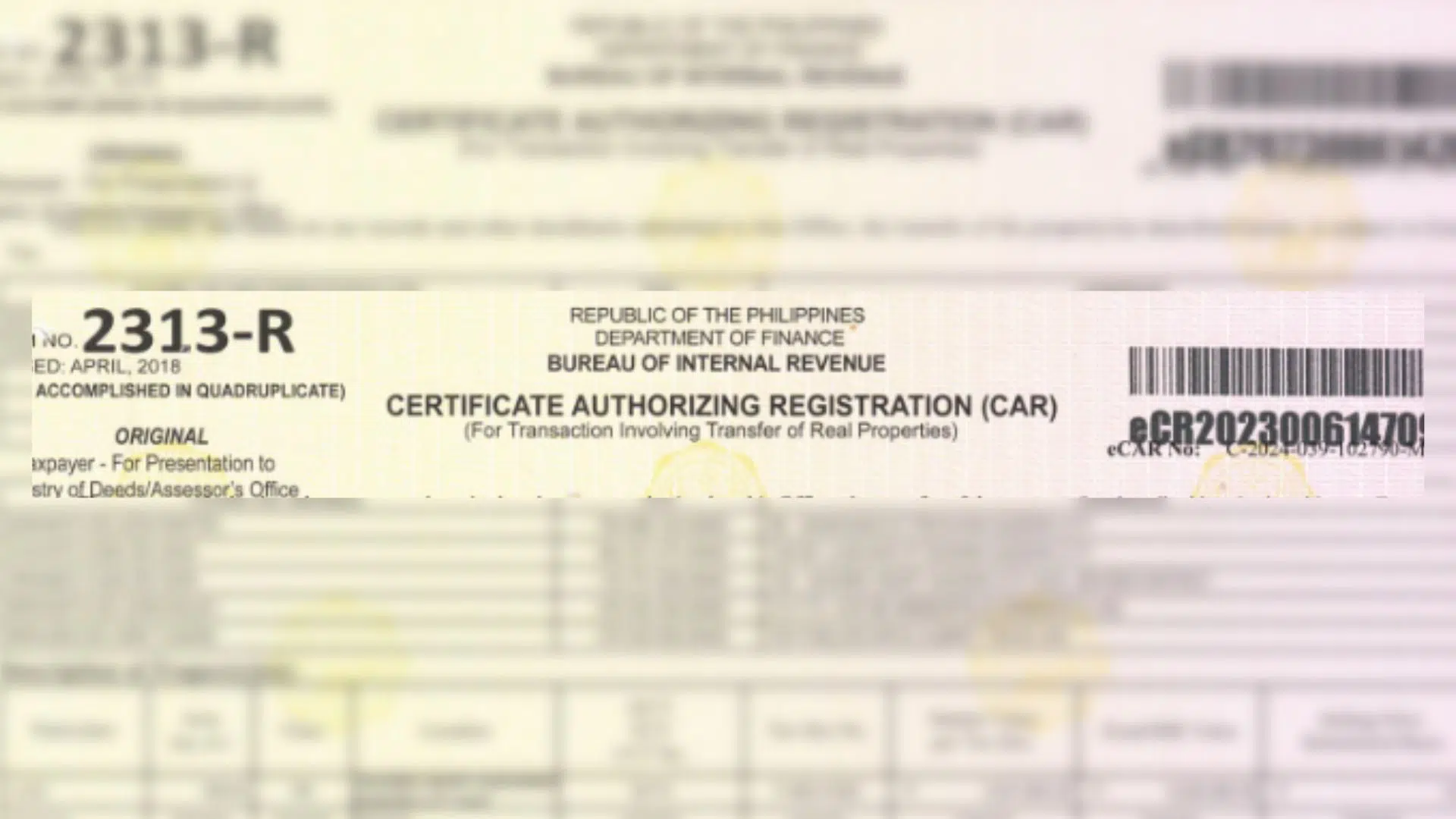 BIR clearance certifying estate tax paid.
The BIR stage is where the estate is computed for tax purposes, documentary requirements are checked, and the eCAR is issued—documents that registries commonly require before they register transfers of inherited property.
- BIR Form 1801 is the estate tax return commonly used for estate tax filing, and filing timelines depend on the applicable rules for the date of death.
- The estate tax rate under current NIRC provisions is 6% of the net estate, subject to deductions under the law applicable to the date of death.
- Incomplete submissions cause repeat visits and long delays; the fastest cases are those that match the RDO checklist exactly.
- Your deed/affidavit should match the asset descriptions in the title/tax declaration to avoid BIR objections.
TLDR: Most delays come from incomplete or inconsistent BIR submissions; plan the BIR file like a checklist-driven audit to get your eCAR sooner.
Action: Ask for the RDO’s current estate transfer checklist and assemble your file in the exact order before your first submission.

Estate settlement costs cover taxes, document retrieval, transfer fees, and registry processing.
Costs are usually similar to an EJS because the same taxes and most government fees apply; the largest amount is often estate tax, document gathering/correction costs, local transfer tax, and registry/assessor processing fees.
- Document retrieval: civil registry certificates, certified true copies of titles and tax declarations, tax clearances, and maps/plans where needed. The process is very manual and you will need to really spend time and effort on this.
- Estate tax: computed under the rules applicable on the date of death; current NIRC provisions impose 6% estate tax on the net estate, with statutory deductions.
- Local transfer tax: imposed by provinces/cities within statutory rate limits; cities can impose higher rates than provinces within legal caps.
- Registration fees: Registry of Deeds fees for title transfer and Assessor’s Office fees for tax declaration transfer, plus incidental notarization/professional fees.
TLDR: Expect estate tax, local transfer tax, and registration fees to be the biggest costs; missing documents and corrections usually add the most unexpected cost.
Action: Prepare a simple budget table listing taxes and office fees, then set aside a contingency fund for document correction or additional requirements.
 Estate settlement delays arise from multiple factors.
Timelines vary by city and by document completeness, but most cases take several months because publication alone takes about three weeks and BIR and registry processing often involves multiple submissions and waiting periods; furthermore, most documents are incomplete. Fast cases take about a year to settle.
- Fast cases: complete documents, no discrepancies, cooperative offices, and clean asset records.
- Slow cases: missing title, mismatched names, missing civil registry records, unclear technical descriptions, or uncertainty about heirs.
- Plan for multiple visits: BIR, Registry of Deeds, Assessor’s Office, Treasurer’s Office, and sometimes PSA/LCR archives.
TLDR: If your documents are clean, the process can move in months; if you have missing titles or civil registry issues, timelines can extend significantly.
Action: Build a calendar for publication dates, BIR submission dates, and registry filing dates, then track them like a project to avoid stalls.

Publication gives notice to protect creditors and heirs.
The biggest risks come from incorrect heirship claims, incorrect publication and tax noncompliance—any of which can lead to invalidation, lawsuits, or personal liability.
- Risk 1 — Another heir appears: a wrong “sole heir” claim can be challenged, and courts have voided self-adjudication documents when the affiant was not the sole heir.
- Risk 2 — Failure to publish: skipping publication can cause rejection at registries and undermines the notice function of Rule 74.
- Risk 3 — Tax penalties: late filing/payment can trigger penalties and can delay issuance of the eCAR needed for transfer.
TLDR: Sole adjudication is safest when heirship is verified, publication is completed, and taxes are correctly paid/cleared before registration.
Action: Before signing, do a “risk audit”: heirs check, tax check, and publication plan.

Choose what applies and consult a lawyer for guidance.
If there are multiple heirs, a dispute, a will, a Deed of Sole Adjudication may be the wrong tool; the safer path may be an Extrajudicial Settlement with all heirs or a court-supervised settlement/probate.
- Multiple heirs: use an Extrajudicial Settlement signed by all heirs and complete publication/BIR/registration steps.
- Disputed heirship or contested claims: judicial settlement is often necessary so the court can determine heirs and partition the estate.
- With a valid will: probate is typically required before distribution and transfer. However, if the will is invalid, probate is useless, so please ask a lawyer to do a will assessment first.
- Complex debts or creditors: a court-supervised process may better protect heirs and clarify debt payment before distribution.
TLDR: If the facts do not fit the sole-heir model, switch early to the correct settlement route to avoid later invalidation.
Action: If any sibling/child/other heir exists or there is a disagreement, stop drafting a sole adjudication and shift to an EJS or judicial strategy immediately.
 Supreme Court rulings void false sole?heir claims and undo transfers.
Supreme Court decisions show that the “sole heir” label is not forgiving when the facts are wrong or heirs are excluded, courts can invalidate documents and unwind transfers, even if papers were later used to update records.
- Rebusquillo v. Spouses Gualvez (G.R. No. 204029, June 4, 2014): the case discusses an Affidavit of Self? Adjudication executed even though the affiant was not truly the sole heir and highlights the danger of relying on false sole-heir claims.
- Treyes v. Larlar (G.R. No. 232579, Sept. 8, 2020): the decision discusses remedies where estates are improperly settled under Rule 74 mechanisms and the interaction of Rule 74 with other remedies.
- Rule 74 safeguards and title annotations: discussions emphasize that Rule 74 includes protective measures for creditors and other interested persons, and titles may carry related annotations that require proper cancellation steps.
TLDR: Real cases show that a wrong sole-heir filing can be undone years later; your best defense is correct heir verification and strict compliance.
Action: Before filing, gather proof that excludes other heirs (not just proof that includes you), and keep certified copies for future challenges.

Verify heirship, secure documents, and follow tax?to?title steps for smooth estate settlement.
Start by verifying heirship and collecting documents before you draft. Most failures happen because the heir did not confirm whether there were other heirs or because key property/civil registry documents were missing or inconsistent.
- Verify heirship with documents (civil registry records and family history) before you sign any “sole heir” statement and never exclude other heirs.
- Secure certified true copies of the title and tax declaration early.
- Plan the sequence: BIR Form 1801 submission, eCAR publication, Registry of Deeds transfer, and Assessor tax declaration transfer.
- Treat this as a compliance project: checklists, deadlines, and copies of every filing.
TLDR: Your first job is verification and document collection; once those are solid, drafting and processing become much safer and faster.
Action: Email admin@lawyerphilippines.org with your document list and a short family background so you can be guided on the correct instrument and a step-by-step plan.